 Office info
 Storage info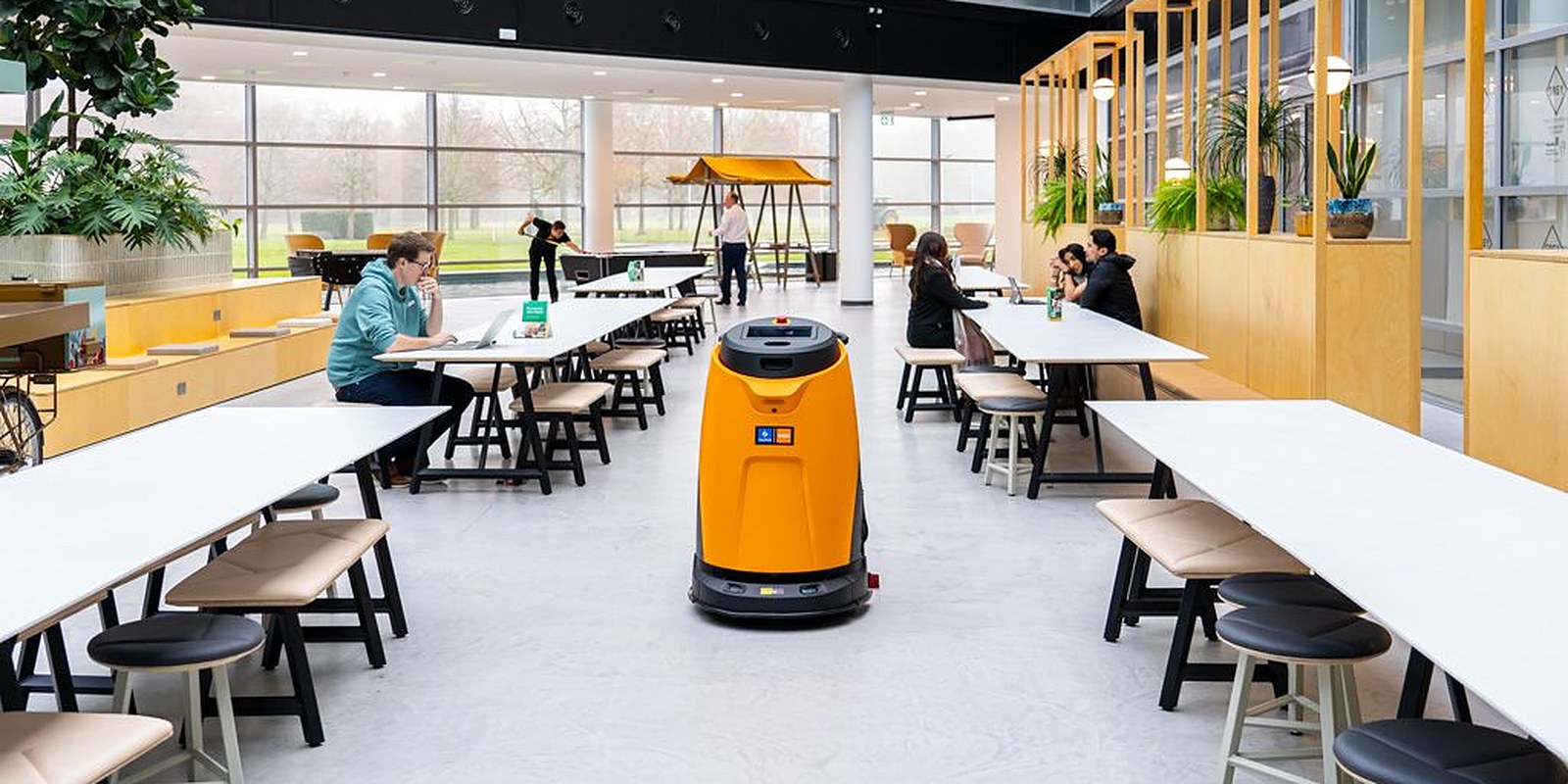
In short
- A TASKI Ecobot 50 with its workstation costs a site about €1,050 a month once depreciation over 5 years, service, wear parts and financing are added up; the compact Phantas about €480. A robot pays off when it takes over enough hours of manual work each day for that amount to be lower than the cost of the worker.
- With Montenegrin wages in 2026 this means: at a net wage of €600 the Ecobot 50 has to replace about 8 hours of manual work a day, at €800 about 6 hours, and at the average wage of €1,037 about 4.5 hours.
- The Euro model from 1 January 2027 (minimum net wage of €1,000, €1,250 and €1,400, pension and unemployment contributions at 0%, income tax of 9% above €700) lowers the Ecobot 50 threshold to 4–5.3 hours a day for day work and 3–4 hours at night. A 1,200 m² supermarket that is mopped by hand today would then recover the robot in about four years.
- It pays off fastest on night shifts (a premium of at least 40%), on large open floors (from 1,500 m² up), where cleaning runs 7 days a week and where floors are still mopped by hand.
- It does not pay off in small, fragmented spaces (rooms, offices), where a ride-on or walk-behind machine already covers a smaller area, or in seasonal properties.
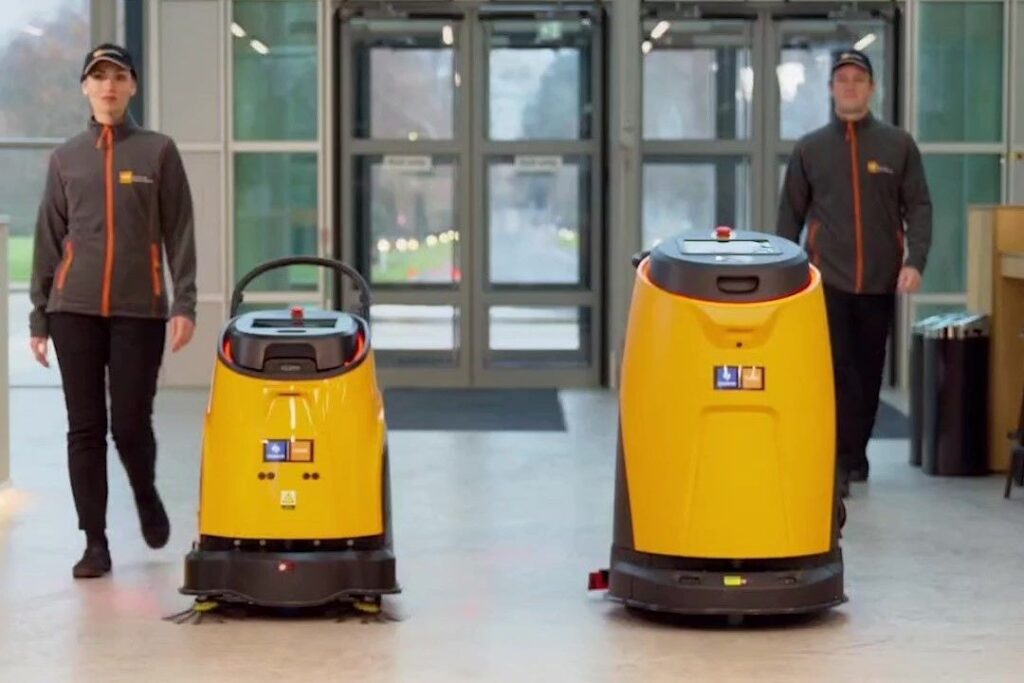
The question we hear most often when we demonstrate a cleaning robot is not “what does it do” but “when does it pay off here”. The answer from European trade fairs does not automatically apply to Montenegro: an hour of work costs an employer in Germany three to four times as much as here, so the calculation is different. That is why we ran the numbers with Montenegrin wages and taxes for 2026, repeated them under the draft laws of the “Euro model” package that would apply from 1 January 2027, and used the realistic performance of the TASKI robots we supply. At the end you will find a checklist of the conditions a site has to meet for a robot to work properly at all.
Which TASKI robots exist and what they do
TASKI robots are developed by Diversey together with Gausium Robotics, one of the largest manufacturers of cleaning robots in the world (more than 4,000 customers in 70 countries). We offer three models for three different jobs.
| Model | Job | Performance | For which sites |
|---|---|---|---|
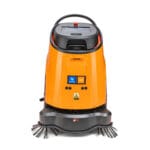
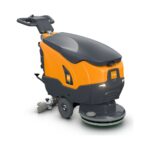
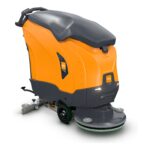
| TASKI GS Ecobot 50 Pro | Scrubbing and drying hard floors, 50 cm working width | up to 1,800 m²/h, up to 1,200 m² per tank fill; runtime 3–8 h | Supermarkets, shopping centres, airports, hospital corridors, production and warehouse halls |
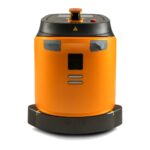
| TASKI GS Ecobot 40 | Vacuuming, sweeping and dust mopping, hard floors and carpets, HEPA H13 | up to 1,200 m²/h; runtime 3–18 h | Offices, schools, carpeted hotel corridors, conference halls |
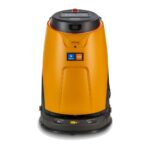
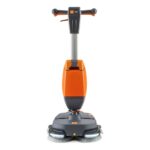
| TASKI GS Phantas | Scrubbing, vacuuming or sweeping in one compact machine (54 × 44 cm) | realistically 200–400 m²/h; up to about 1,000 m² per site | Hotel lobbies, restaurants, small shops, clinics, the space under tables |
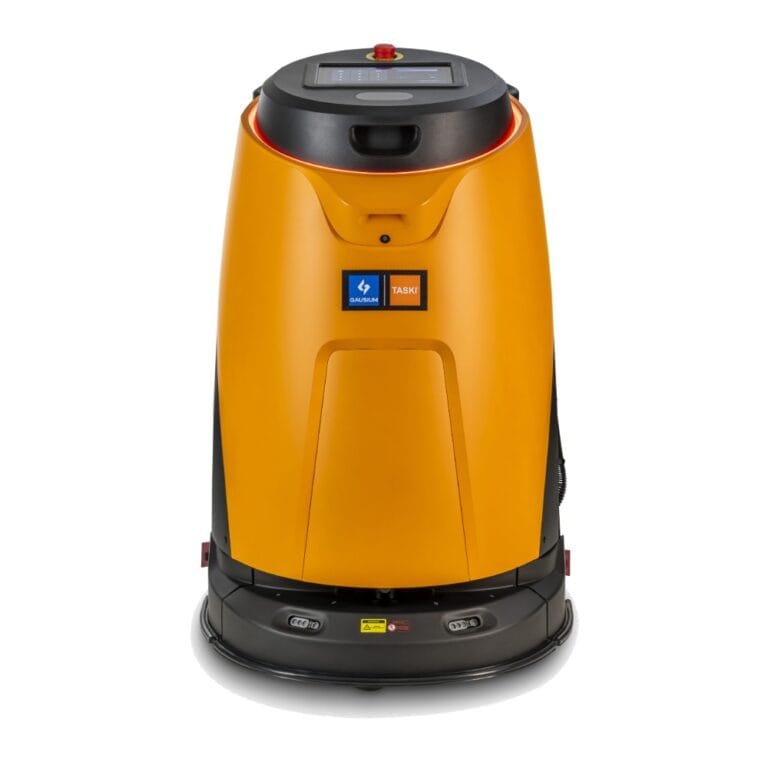
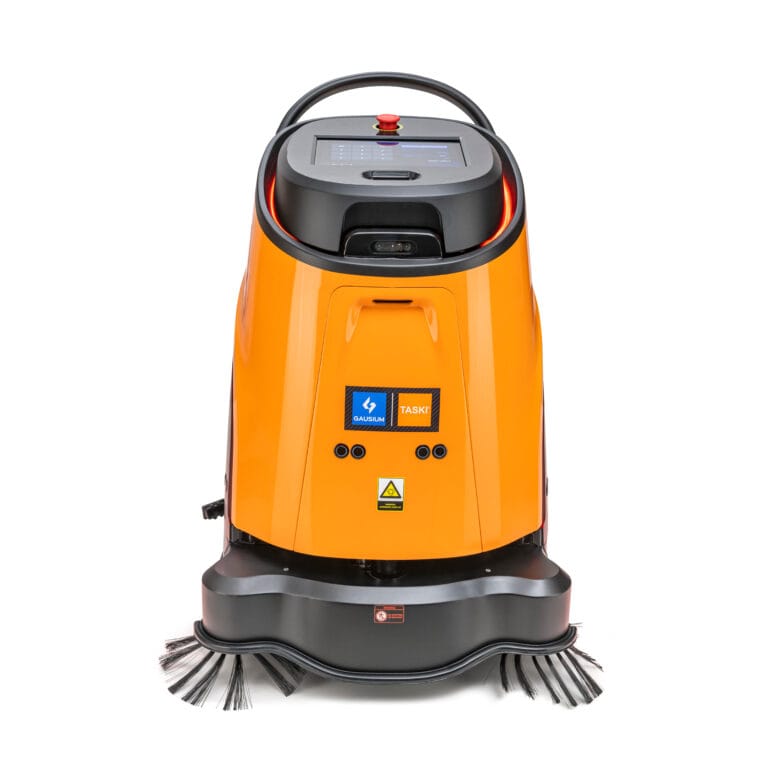
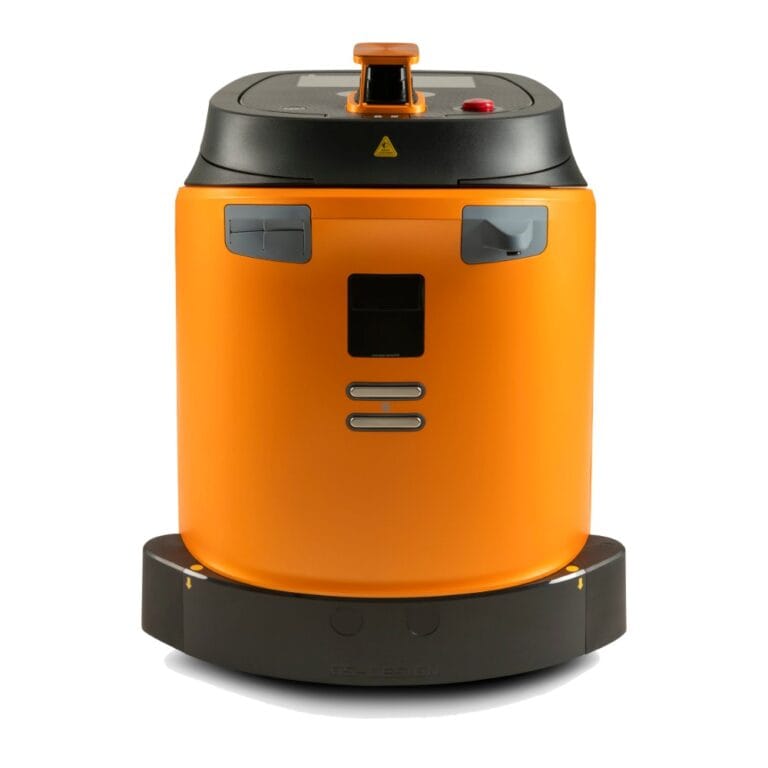
It is important to tell maximum from realistic performance. For the Phantas the manufacturer states a maximum of 700 m²/h but a realistic 200–400 m²/h, because the robot slows down around obstacles, follows edges and returns to its station. That is why the calculation below always uses realistic figures.
What an hour of a cleaner’s work costs in Montenegro in 2026
Since the “Europe Now 2” reform the employer no longer pays a pension contribution, so the difference between gross pay and the employer’s total cost is small (about 1%: unemployment insurance, the Labour Fund and the Chamber of Commerce). The employee pays 10% pension and 0.5% unemployment contributions out of gross pay, and income tax is 0% up to €700, 9% from €700 to €1,000 and 15% above that, plus the municipal surtax.
What matters for a robot is not the monthly wage but the price of an effective working hour. A worker paid for 2,080 hours a year actually works about 1,750 once annual leave, public holidays and sick leave are deducted. A robot also works on Sundays and holidays, so it has to be compared with that effective hour.
| Net wage | Gross wage | Employer cost per month | Effective hour, day | Effective hour, night (+40%) |
|---|---|---|---|---|
| €600 (minimum, up to education level V) | €670 | €677 | €4.64 | €6.50 |
| €800 | €919 | €928 | €6.36 | €8.91 |
| €1,037 (average, Monstat, July 2026) | €1,238 | €1,250 | €8.57 | €12.00 |
| €1,200 | €1,462 | €1,477 | €10.13 | €14.18 |
Calculated with a 13% surtax; in Podgorica and Cetinje the surtax is 15%, so the gross wage is a few euros higher. Meal allowance, transport, and accommodation and food for seasonal staff are not included; in practice they add another 10–30% to the cost of a worker.
What a robot costs per day
The purchase price of a robot on its own says little. To compare it with a worker it has to be broken down into a daily cost over its service life: depreciation over 5 years, service and wear parts (brushes, squeegee blades, filters) at about 6% of the value per year, financing (leasing or a loan, about 6% on the average balance) and about €300 a year for electricity, SIM and online reports.
| Robot and station | Annual cost | Per month | Per day |
|---|---|---|---|
| Ecobot 50 + workstation (recharges, refills and drains water on its own) | €12,593 | €1,049 | €34.50 |
| Ecobot 40 + charging station | €10,129 | €844 | €27.75 |
| Phantas + workstation | €5,744 | €479 | €15.74 |
Costs are calculated from indicative 2026 selling prices excluding VAT (a VAT-registered business deducts it, so it plays no part in the calculation). We quote the price for your configuration on request.
A robot does not work entirely on its own. Someone has to start it or check the schedule, empty and rinse the tank if the site has no workstation, clean the brushes and squeegee, and finish by hand the corners and wall edges the robot cannot reach. The calculation therefore counts half an hour of human work a day that remains even when the robot is running.
The break-even point: how many hours of manual work a robot has to replace
The calculation is simple: a robot pays off when its daily cost is lower than the cost of the hours of manual work it takes over each day, minus that half hour of supervision. This gives two tables that answer the same question from two sides. Both are calculated for the Ecobot 50 with workstation, the robot for larger areas.
If you know the wage: how many hours a day the robot has to take over
| Worker’s net wage | Day | Night (+40%) |
|---|---|---|
| €600 | 7.9 h | 5.8 h |
| €800 | 5.9 h | 4.4 h |
| €1,037 | 4.5 h | 3.4 h |
| €1,200 | 3.9 h | 2.9 h |
If you know how many hours a day the floor is cleaned: from which wage the robot pays off
| Hours of manual floor cleaning a day, 7 days a week | Pays off for day work from a net wage of | Pays off for night work from a net wage of |
|---|---|---|
| 3 h | about €1,585 | about €1,170 |
| 4 h | about €1,170 | about €875 |
| 5 h | about €940 | about €700 |
| 6 h | about €790 | about €580 (already pays off) |
| 8 h or more | about €595 (already pays off) | about €425 (already pays off) |
In short: at today’s minimum wage a robot only pays off once it takes over almost a full working day of one worker. At a wage of €800, five to six hours a day are enough, and four on a night shift.
The threshold also depends on the robot. The compact Phantas costs less than half as much as the Ecobot 50, so at a net wage of €800 it pays off once it takes over 3 hours of work a day, but it also cleans much less: realistically 200–400 m² an hour and up to about 1,000 m² per site.
From 1 January 2027: the Euro model changes the calculation
On 17 September 2026 the Government adopted a package of draft laws known as the “Euro model”, to apply from 1 January 2027. Three changes matter for the cost of a worker:
- New minimum net wage (amendment to the Labour Law): €1,000 for jobs requiring education level I or II, €1,250 for level III or IV and €1,400 for level V and above. A private-sector employer may not lower the qualification level in its job classification for staff employed on 31 August 2026 in order to pay a lower minimum.
- Contributions to zero: the pension and disability insurance contribution (today 10%, paid by the employee) and the unemployment insurance contribution (today 0.5% + 0.5%) become 0%. Only the Labour Fund contribution and the Chamber of Commerce fee remain, together about 0.5% paid by the employer.
- Income tax: 0% up to €700 and 9% on everything above €700. The 15% rate is abolished.
As a result, from 2027 gross pay stays close to net pay, and a worker on the €1,000 minimum costs the employer about €1,040 a month rather than almost €1,200, as it would under today’s rates. That is still about 50% more than a cleaner on today’s €600 minimum (€677). A robot bought today has the same cost in 2027, so the calculation shifts in its favour.
| Minimum wage from 2027 | Gross wage | Employer cost per month | Effective hour, day / night | Ecobot 50 pays off from (day) | Ecobot 50 pays off from (night) |
|---|---|---|---|---|---|
| €1,000 net (levels I and II: primary school, basic vocational training) | €1,034 | €1,039 | €7.12 / €9.97 | 5.3 h a day | 4.0 h a day |
| €1,250 net (levels III and IV: secondary school) | €1,312 | €1,318 | €9.04 / €12.66 | 4.3 h a day | 3.2 h a day |
| €1,400 net (level V and above) | €1,479 | €1,486 | €10.19 / €14.27 | 3.9 h a day | 2.9 h a day |
Calculated under the draft laws adopted by the Government on 17 September 2026 (9% tax above €700, pension and unemployment contributions at 0%, 13% surtax). The laws have not yet been passed by Parliament, so the figures may change. Ecobot 50 with workstation, as above.
What this means in practice: a supermarket that mops 1,200 m² by hand six hours a day with a worker on the €600 minimum today recovers an investment in an Ecobot 50 in more than eight years, which is longer than the robot’s service life. When the same worker is on the €1,000 minimum from 2027, the payback drops to about four years, and if the job is classified at level III or IV (€1,250 minimum), to about three. In other words, sites where a robot does not pay off today because of low wages move into the profitable zone in 2027, and a decision made at the end of 2026 captures the full saving from the first day of the new year.
Six practical examples
How many hours a robot replaces depends not only on the floor area but also on how the floor is cleaned today. A worker with a mop and bucket realistically cleans 150–250 m² an hour, while a worker with a walk-behind machine such as the TASKI ULTIMAXX 900 or ULTIMAXX 1900 cleans 700–1,000 m² an hour, including filling and emptying the tanks. Vacuuming carpet with a vacuum cleaner runs at about 300 m² an hour. The examples use 200, 800 and 300 m² an hour.
| Site | Today → robot | Hours the robot takes over per day | Pays off from a net wage of | Today (€600 minimum) | From 2027 (€1,000 / €1,250 minimum) |
|---|---|---|---|---|---|
| Supermarket, 1,200 m² sales floor, cleaned every morning | Mop and bucket → Ecobot 50 | 6 h | about €790 | Not at the minimum wage (−€3,300 a year); pays off once the cleaner earns about €800 net | Pays off: saving €1,700 / €5,600 a year |
| The same supermarket | Machine with operator → Ecobot 50 | 1.5 h | over €3,700 | Does not pay off: the machine already does most of the work | Still no |
| Supermarket or hypermarket of 2,500 m² and more | Mop and bucket, two workers → Ecobot 50 | over 12 h | below the minimum wage | Pays off: saving about €7,700 a year | Pays off: saving €18,600 / €27,000 a year |
| Shopping centre or airport, 4,000 m² of corridors, cleaned at night | Machine with operator → Ecobot 50 | 5 h at night | about €700 | Borderline (−€1,900 at the minimum wage); pays off once the night worker earns about €700 net | Pays off: saving €3,800 / €8,200 a year; the worker moves to washrooms and daytime maintenance |
| Carpeted corridors and a conference hall, 1,500 m², vacuumed daily | Vacuum cleaner → Ecobot 40 | 5 h | about €780 | Not at the minimum wage (−€2,500 a year) | Pays off: saving €1,600 / €4,700 a year |
| Hotel lobby and restaurant, 500 m² | Mop and bucket → Phantas | 2.5 h | about €960 | Does not pay off (−€2,400 a year) | Borderline: −€500 / +€900 a year; also makes sense if the hotel cannot find staff |
A robot rarely replaces a worker who is already on the payroll. Most often it replaces a worker you cannot find. On the coast several thousand workers are missing every season, and room attendants and cleaners are among the most sought after. When a robot takes over the morning cleaning of corridors, the lobby or the sales floor, the same team has time for rooms, washrooms and touch points, where guests and inspectors look. That is why your calculation should always include the cost of the alternative: an agency, overtime, accommodation and food for a worker from abroad.
Conditions under which a robot works properly
The calculation falls apart if the robot cannot work without interruption. Check your site against this list before deciding.
- Large, open, level areas. A robot is at its best in aisles, corridors and halls. The more a space is broken up into small rooms with doors, the more time it spends manoeuvring and the cheaper a person with a mop becomes.
- A stable layout. The robot cleans along a map it learns once. If the layout of shelves, tables or display pallets changes every day, the robot drives around obstacles and leaves uncleaned zones.
- Passages and slopes. For autonomous operation the Ecobot 50 needs a passage of at least 93 cm and 1.2 m to turn, the Ecobot 40 87 cm and 1.1 m. Ramps may have at most about 4–4.6° while cleaning. The robot cannot handle stairs, and riding a lift is a separate integration project.
- Cleaning when nobody is there. The robot is safe around people (LiDAR, cameras, collision sensors, IEC 63327), but it gets the most done when the space is empty: at night, before opening, after closing.
- Daily cleaning. A robot makes sense when it works every day, ideally several times a day. If the floor is cleaned twice a week, the cost of the robot is spread over too few working hours.
- All year, not just the season. A robot bought for a hotel that operates for five months stands idle for seven, while depreciation runs all year. For seasonal properties count only the operating days or consider renting.
- A place for the station and network coverage. The workstation recharges the battery, refills clean water and drains dirty water on its own, so it needs a water connection and a drain. The robot sends reports over a SIM card, so mobile coverage is needed where it works.
- One responsible person. Every robot needs a “host” who starts it, empties it and reports faults. Without one, the robot ends up in a corner within a month.
What the calculation leaves out but works in the robot’s favour
- The same quality every day. A robot does not skip a corner when it is in a hurry and does not work worse at the end of a shift. Every cleaning run is recorded in a report with a coverage map, which is evidence for HACCP, chain audits or hotel standards.
- Less water and chemicals. The Ecobot 50 recycles water through a four-stage filter down to 1 micron and produces no waste water on each pass, and the chemical dose is always the same.
- Fewer injuries and less sick leave. Pushing a mop and carrying buckets are the most common cause of back and shoulder pain among cleaners.
- No sick leave, resignations or retraining. Staff turnover in cleaning is high, and every new worker means weeks of lower quality.
These items are hard to put into euros, so we have not included them. When the calculation is borderline, they usually decide it.
Buy or rent
For sites that are only trying robotic cleaning or operate seasonally, renting or leasing reduces the risk: the monthly instalment compares directly with the monthly cost of a worker from the table above, and service and wear parts are usually included. Buying pays off when it is clear the robot will work every day for more than five years. Either way we recommend a trial run at your site, because only then do you see how many square metres the robot really covers in one night.
How to calculate it for your site
- Measure the area the robot would clean and how many times a day it is cleaned.
- Write down how many hours a day your staff now spend on that floor and what they clean it with.
- Check the break-even table: if your cleaners’ net wage is above the amount for those hours, the robot pays off.
- Check the list of conditions. If your site fails two or more, a machine with an operator is the better investment. For choosing a machine, see our guide to choosing a TASKI machine by floor area.
If you send us a floor plan or the floor area, the floor types, the cleaning schedule and the number of people who now clean the floors, we will run the calculation with your figures and recommend a model, robot or machine with operator, whichever pays off better. We can bring a robot for a trial run, map your site and train your staff on location, and we provide service and spare parts for TASKI machines in Podgorica.
Sources
- Monstat — Wages, July 2026 (average net and gross wage)
- Government of Montenegro — decisions of 17 September 2026 (“Euro model” draft laws)
- Draft Law on Mandatory Social Insurance Contributions (17 September 2026)
- Draft amendments to the Labour Law — minimum wage by qualification level
- Draft Personal Income Tax Law
- General Collective Agreement — night-work premium
- Montenegro salary calculator 2026 (Unija)
- TASKI — Phantas product specification sheet
- Gausium Robotics — ROI case studies (EUROSPAR Korneuburg, FMZ Imst)