 Office info
 Storage info
In short
- HACCP does not prescribe a brand of chemistry; it requires that for every surface you know what it is cleaned and disinfected with, how and how often, and that this is written down.
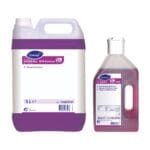
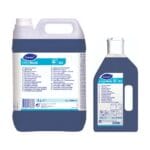
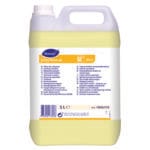
- The Diversey SUMA programme covers the whole kitchen: manual and machine dishwashing (D1, L2, L56, A5), surfaces (D2, D10), grease (D3.5, D9), limescale (D5.2) and disinfection (D4 Tab, D4.12, Chlorsan).
- The golden rule: clean first, then disinfect, then rinse food-contact surfaces with potable water.
- Colour-coded cloths and zones, fixed dosing and records make up a procedure an inspector can verify.
When the sanitary inspector walks into a kitchen, they do not ask which detergent you use. They ask where the cleaning plan is, who signed it, how much is dosed and what the raw-meat work surface is disinfected with. The HACCP system (hazard analysis and critical control points) is mandatory for everyone who prepares food, and cleaning and disinfection are its prerequisite programme. In this guide we give the procedure we set up in restaurants and hotel kitchens with the Diversey SUMA programme, with dosing taken from the technical data sheets.
Three rules before any product
- Cleaning and disinfection are not the same. A detergent removes grease and food residue. A disinfectant kills microorganisms, but only on a clean surface. Disinfectant on a greasy chopping board is wasted.
- Food-contact surfaces are rinsed. After the detergent and after the disinfectant, with potable water, then left to air-dry. The exception is alcohol-based products, which evaporate without residue.
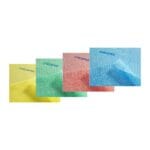
- Zones and cloths by colour. Green for food preparation, red for sanitary and high-risk zones, blue for general surfaces, yellow for everything else. SUMA Lavette cloths come in all four colours, have antimicrobial protection and FCC certification for food contact.
Which SUMA product for which zone
The SUMA programme is organised by letters and numbers: D are detergents and disinfectants for manual use, L are liquid detergents for dishwashers, A are rinse aids, K are soaking products. The table gives the basic set for a restaurant or hotel kitchen.
| Zone / task | Product | Dosing | Contact time and rinsing |
|---|---|---|---|
| Manual dishwashing | SUMA Star D1 | At least 0.6 ml per litre of warm water | Rinse, leave to dry |
| Work surfaces, walls, doors, equipment | SUMA Multi D2 | 5 ml per 750 ml (spray bottle) or 5 ml per 1 l (floor, bucket) | Rinse food-contact surfaces with clean water |
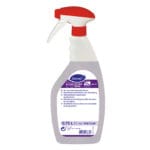
| Cleaning and disinfection in one step | SUMA Bac D10 | 1 % solution (7.5 ml per 750 ml) | Spray, at least 30 seconds; soaking 5 minutes; rinse |
| No-rinse disinfection (boards, knives, thermometers) | SUMA Alcohol Spray D4.12 | Undiluted | EN 1276 in 15 s, virucidal in 60 s; no rinsing |
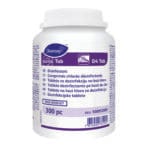
| Disinfection by soaking, all surfaces | SUMA Tab D4 | 1 tablet per 10 l of water = 150 ppm chlorine | Rinse food-contact surfaces |
| Chlorine cleaning and disinfection (meat, fish processing) | SUMA Chlorsan D10.4 | 8 ml per 1 l; virucidal 10 ml per 1 l | 5 minutes, rinse; not on aluminium |
| Vegetable washing | SUMA Chlor D4.4 | 5 ml per litre of water (0.5 %) | Soak 5 minutes, rinse with clean water |
| Grease: hoods, cookers, floors | SUMA Break up D3.5 | At least 10 ml per litre | Rinse; safe on aluminium |
| Ovens, grills, salamanders | SUMA Grill D9 | Undiluted on a surface at 60–80 °C | 5–30 minutes, rinse with hot water |
| Limescale: dishwasher, boilers, bain-marie | SUMA Scale D5.2 | 100 ml per litre (soaking and machine), 200 ml/l spraying | 30 minutes or 10–15 minutes of circulation; rinse |
| Machine dishwashing, hard water | SUMA Tera L56 + Rinse A5 | 1–3 ml/l detergent, 0.2 ml/l rinse aid | Automatic dosing, rinsing at 70–80 °C |
Dosing “by eye” is the most common finding we see in kitchens. The fix is a wall-mounted dispenser: the Divermite doses exactly 15 ml of concentrate from a 2 l pouch with no water or power, and the QFM R-Gap connects to the water supply and fills a bottle or bucket with ready solution from a 5 l container. For SUMA Bac conc D10 in a pouch, dosing through the Divermite is the only permitted way of use.
Procedure during service: clean as you go
The HACCP procedure does not begin at the end of the shift. The greatest risk is cross-contamination during work: raw meat and then salad on the same board, a cloth from the sink on the work table.
- After every change of foodstuff (raw meat, fish, eggs, then anything else): remove residue, spray D4.12, wait for it to dry. For boards and knives that is 60 seconds. No rinsing.
- Work tables every two hours or at a change of task: D2 in a spray bottle, cloth of the right colour, rinse.
- Refrigerators and handles: Bac D10 in a spray bottle, 30 seconds, wipe.
- Salad vegetables: soak in D4.4 solution for 5 minutes, rinse with potable water.
- Floor spills immediately: Break up D3.5 and a mop, so grease does not become a slippery film.
End-of-shift procedure
Closing the kitchen follows a sequence from clean to dirty and from top to bottom, just like a hotel room. First clear, then wash, then disinfect, then the floor.
- Clearing. All food into the refrigerator, all crockery into the machine or sink, waste out of the kitchen.
- Dishwasher. The dosing equipment (Accuratic or Revoflow) works on its own; staff empty and wash the filters, check the container level and leave the door open. Descale with D5.2 once a week or according to water hardness.
- Equipment and work surfaces. D2 detergent, rinse, then Bac D10 or D4 Tab solution, 5 minutes’ contact, rinse with potable water, leave to dry.
- Thermal equipment. Grill D9 on a warm oven or grill (below 80 °C), 5 to 30 minutes, rinse. Drain fryers and wash with a 10 % solution of D3.5 or D9 at a controlled boil for 15 minutes.
- Sinks and drains. D2, then disinfection with D4 Tab solution.
- Floor and walls. Break up D3.5, 10 ml per litre of hot water, mop or low-pressure sprayer, rinse. Walls around the cooker once a week.
- Cloths. Lavette cloths go to the washing machine, up to 50 washes per cloth. They never stay wet in the sink overnight.
Bac D10 is a disinfectant based on quaternary ammonium compounds: odourless, safe on all materials including aluminium, cleans and disinfects in one step. Chlorsan D10.4 and D4 Tab are chlorine-based: faster under soiled conditions and virucidal, but not for aluminium or galvanised surfaces, and never to be mixed with acidic products such as Scale D5.2. In most restaurants Bac D10 is the basic disinfectant, while chlorine goes to raw meat and fish zones and to periodic drain disinfection.
Records: what the inspector really looks at
A procedure without records does not exist for the inspector. The minimum we keep at our customers’ sites:
- Cleaning plan by zone: surface, product, concentration, contact time, frequency, who does it. One A4 table on the kitchen wall, in the staff’s language.
- Daily signed checklist: end of shift, who did what.
- Technical and safety data sheets for every product in a folder, in the local language. You receive them from us with the delivery.
- Dishwasher temperature: wash and rinse (70–80 °C) recorded once a day.
- Staff training with date and signature, renewed at every change of product.
Send us a sketch of the kitchen with its zones, the number of meals per day and the dishwasher you have, and we will draw up a cleaning plan with the SUMA programme, dosing equipment and staff training on your premises. Technical and safety data sheets are delivered with the first order.