Office info
 Storage info
In short
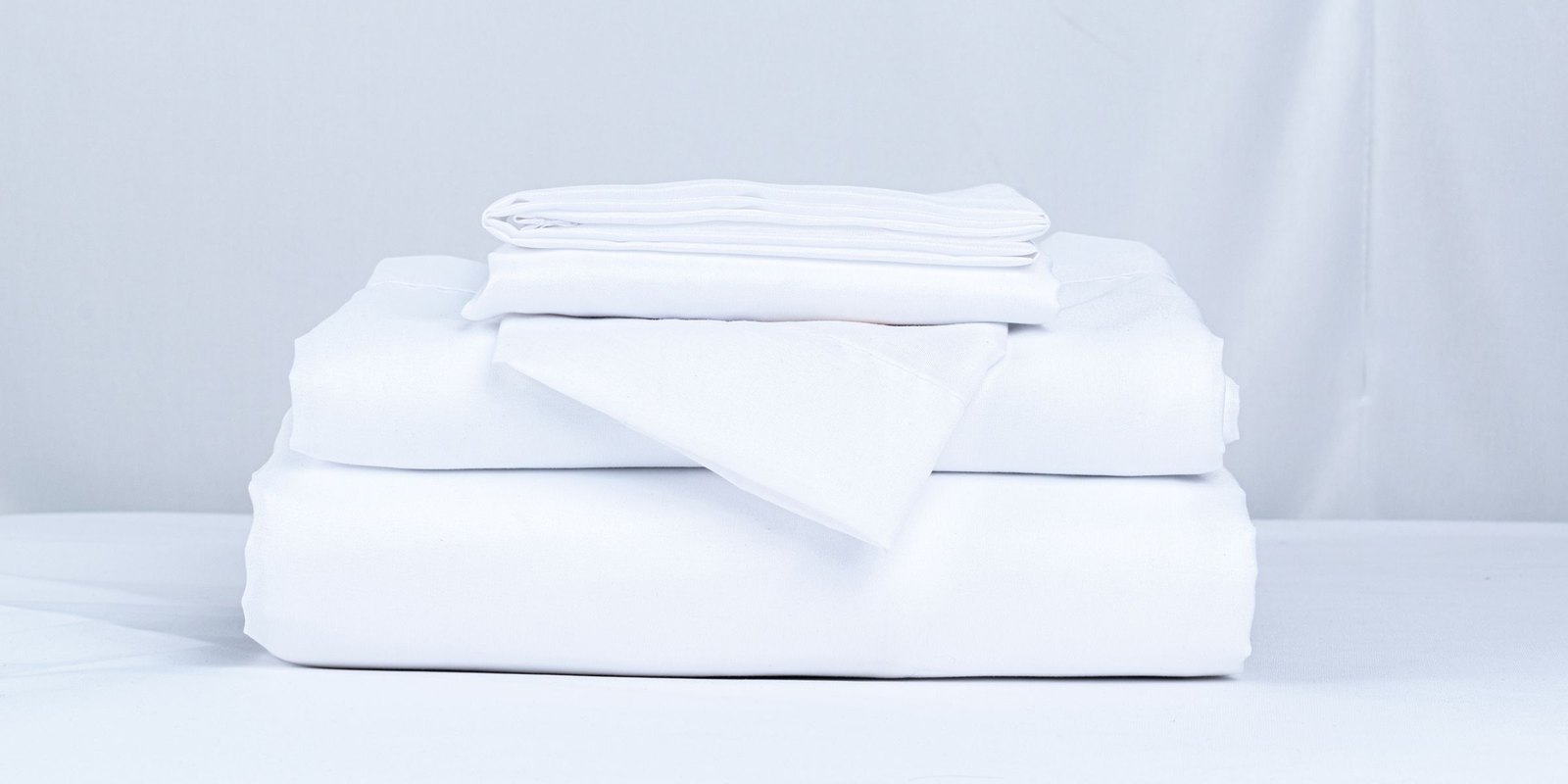
- Grey and yellowed bed linen is rarely a bleach problem. The usual causes are too little or too much detergent, hard water, iron in the water, a wash temperature that is too low and alkali or softener residues left in the fibres.
- A professional laundry bleach is chosen by temperature and fabric: oxygen bleach (CLAX Bright Bleach, Personril, Oxy) for most programmes, chlorine bleach (CLAX Hypo Conc) only for white cotton that is not delicate.
- Stain removal on bed linen starts before the wash. The four CLAX Magic spotters cover four groups of stains: bleachable (coffee, wine), greasy and cosmetic, protein (blood, food) and rust.
- The golden rule: a stained item never goes into the dryer or through the ironer until the stain is gone, because heat sets it permanently.
Every hotel laundry in Montenegro knows the same problem: bed linen that was white last season is now grey, towels have turned yellow and pillowcases keep make-up marks that a second wash will not shift. The first reaction is usually a stronger bleach or a longer wash, and that often makes things worse: the fabric weakens and the greyness stays. In this guide we explain where greying, yellowing and stains come from, how to choose a professional laundry bleach, when to use chlorine and when oxygen, and how to remove stains selectively before the wash, with doses taken from the manufacturer’s technical data.
Grey, yellow or stained: identify the problem first
Bleach solves only one part of the problem: coloured stains that can be oxidised. Greying and yellowing have other causes, and until they are removed any bleach is wasted.
| What you see | Most common cause | What to change |
|---|---|---|
| Even greyness across the whole item | Too little detergent, an overloaded machine, soil redepositing on the fibre; limescale from hard water | Dose per kg and per water hardness, a booster or sequestrant (CLAX Build, CLAX Renova), loading the machine to its rated capacity |
| Yellowing, especially on pillowcases and sheet edges | Skin oils, sweat and creams not washed out at a low temperature or with weak alkali; drying or ironing too hot or for too long | A stronger alkaline booster, oxygen bleach at the right temperature, checking dryer and ironer temperatures |
| Yellow-brown spots or drop-shaped marks | Iron and rust from the water, pipes or machine; chlorine on a protein stain | A rust inhibitor (CLAX Rust), the CLAX Magic Rust spotter |
| Stiff, “greasy” or dull towels | Excess detergent or softener in the fibres, alkaline residue after rinsing | The correct dose, a final rinse with a neutraliser |
| Individual stains (coffee, wine, make-up, blood) | A stain the main wash cannot remove | Targeted pre-treatment with a spotter |
So before buying a bleach, check the basis of the programme: how many kilograms go into the machine, how hard the water is and whether the detergent dose is right. How to choose and dose the main detergent is explained in our guide to professional laundry detergent in Montenegro.
Oxygen or chlorine: how bleach works
All laundry bleaches work by oxidation: they break down the coloured molecules of a stain so that they become colourless and soluble. The difference is what they oxidise with and at what temperature.
Oxygen bleaches (hydrogen peroxide, percarbonate, peracetic acid) are gentler on fibres and colours. Most are activated by warmer water, so they are chosen by the temperature of the programme. They are the standard choice for hotel bed linen and towels, and some can also be used on colour-fast items.
Chlorine bleaches (sodium hypochlorite, chlorinated isocyanurates) also work at lower temperatures and bleach strongly, but they are more aggressive. They are used only on white cotton and linen that is not delicate, never on coloured items, wool, silk, elastane or nylon. Chlorine must not be mixed with acidic products and is not applied to blood or other protein stains, as it can set them permanently as a yellow or brown mark.
Bleach does not replace detergent. If the main wash does not remove grease and soil, bleach only “lightens” the grey layer, and the fibre wears out faster.
Which CLAX bleach for which programme
Doses come from the manufacturer’s technical data published on the product pages, per kilogram of dry linen. All products are in the laundry bleaches category.
| Bleach | Type and form | Temperature | Dose per kg dry linen | Use |
|---|---|---|---|---|
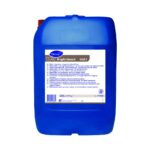
| CLAX Bright Bleach | oxygen, liquid, automatic dosing | 30–50 °C (optimum 40–50) | 4–5 ml (light soiling) | All fabrics except wool and nylon, including colour-fast items; lower-temperature washing |
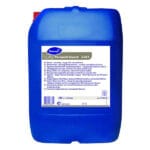
| CLAX Personril | oxygen (peracetic), liquid, automatic dosing | 40–70 °C (optimum 60–70) | 8–12 ml | Bleaching and disinfection; RKI (AB) approved according to the manufacturer; not for wool and nylon |
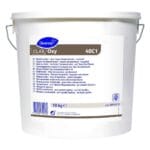
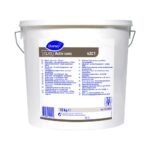
| CLAX Oxy | oxygen, powder (10 kg), manual dosing | 70–80 °C | 1–2 g light, 3–5 g medium, 5–6 g heavy | White cotton at high temperature, degreasing; not for wool and polyamide |
| CLAX Activ Conc | chlorine (isocyanurates), powder (10 kg) | 40–60 °C, pH above 10 | 3.5–6 g (50–60 °C), about 9 g (22–28 °C) | White textiles in commercial and healthcare laundries |
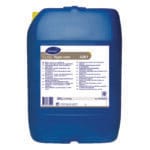
| CLAX Hypo Conc | chlorine (hypochlorite), liquid (20 L) | low temperatures | 4–7 ml light, 7–9 ml medium, 9–12 ml heavy | White and undyed items that are not delicate only; stains left after the main wash |
| CLAX Crisp | oxygen bleach booster, liquid | cold water | 4–5 ml | Cold washing, with CLAX Cool, Bright Bleach or 200 Pur-Eco |
For a hotel that washes at 60 °C or above, the standard choice is CLAX Personril in a dosing system, because it disinfects as well as bleaches. For lower temperatures and mixed fabrics, CLAX Bright Bleach is the choice, and for manual dosing and white cotton at 70–80 °C, CLAX Oxy powder. The chlorine products CLAX Hypo Conc and Activ Conc are kept for white cotton with stubborn stains, not for every wash. In hotels and restaurants they are used most often for white restaurant tablecloths and napkins, where wine, coffee, sauce and grease stains are an everyday matter.
Removing stains from bed linen: four groups, four spotters
What the main wash does not remove, a second wash will not remove either. A stain is treated before the wash, at the sorting table, with a product that matches its chemistry. The Diversey CLAX Magic range divides stains into four groups, and all the products are in the stain removers (spotters) category.
| Stain | Group | Spotter | Note |
|---|---|---|---|
| Coffee, tea, red wine, cola, fruit juice | bleachable | CLAX Magic Oxi | Mild oxygen spotter for white and coloured linen |
| Make-up, lipstick, foundation, ink, curry, grease | greasy and cosmetic | CLAX Magic Multi | Solvent blend; the most used spotter on pillowcases and towels |
| Blood, food, egg, chocolate, grass | protein | CLAX Magic Protein | Enzymatic; no hot water or chlorine before it |
| Rust, iron, tannin | metal | CLAX Magic Rust | Oxalic acid based; rinse immediately and neutralise with an alkaline product |
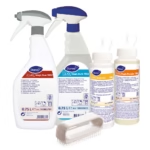
The method is the same for all four: apply directly to the stain, leave for 5 to 10 minutes (15 at most), brush gently if needed and wash on the usual programme. With Magic Rust the item is rinsed thoroughly and neutralised straight away, for example with Magic Protein, and only then washed. For a laundry just starting with spotters, the simplest option is the CLAX Magic Starterkit, a set with all four products and a brush.
Set aside one basket for “stained items” at the sorting point and put the stain chart on the wall above the table. A housekeeper who reports a stain on a pillowcase or towel, and a laundry worker who treats it straight away, before the first wash, solve most problems. If the stain remains after washing, the item goes back for treatment, not into the dryer: the heat of the dryer and ironer sets the stain for good.
Yellowing and rust: when the problem is the water
If yellow-brown spots appear on clean linen, often across a whole load, the cause is usually iron in the water or the plumbing. Bleach does not help here, and chlorine can even deepen the colour. The answer is twofold: a rust inhibitor in the programme and a sequestrant that binds metals.
According to the technical data, CLAX Rust is dosed at 2–3 g/kg dry linen to prevent stains and 6–10 g/kg at 60–70 °C for 10 to 15 minutes (20 to 30 if needed) when stains are already present. It also neutralises alkalinity in the final rinse. With hard water, the CLAX Build booster or the CLAX Renova sequestrant binds calcium and magnesium, so limescale does not settle on the fibre and linen does not turn grey. Measure water hardness with a test strip or ask the local water utility.
How much bleach does a hotel use: a worked example
The example from our detergent guide: a 120-room hotel, 70 % occupancy, about 3 kg of linen per occupied room per day, roughly 7,560 kg a month. If bleach is added to every wash of white bed linen and towels, the monthly quantity at the manufacturer’s doses would be:
| Bleach | Dose per kg | Monthly for 7,560 kg |
|---|---|---|
| CLAX Bright Bleach (40–50 °C) | 4–5 ml | 30–38 L |
| CLAX Personril (60–70 °C) | 8–12 ml | 60–91 L |
| CLAX Oxy (70–80 °C, medium soiling) | 3–5 g | 23–38 kg |
| CLAX Hypo Conc (medium soiling) | 7–9 ml | 53–68 L |
An example, not an average. In practice bleach is added only to programmes for white linen and more heavily soiled textiles, so actual use is lower. Spotters are used per item, not per kilogram.
The figures show why the choice is not just a question of the price of a drum. Personril has a higher dose because it disinfects as well as bleaching, so it also replaces a separate disinfection step. Bright Bleach uses half as much, but works at a lower temperature, where energy is saved. Every item sent back for rewashing uses water, electricity, chemicals and working time again, so a spotter at the sorting table is the cheapest part of the programme.
Six mistakes that ruin white linen
- Chlorine in every wash. Chlorine weakens cotton and linen, and sheets tear and thin faster. For everyday washing, choose an oxygen bleach.
- Bleach at the wrong temperature. CLAX Oxy hardly works at 40 °C, while Bright Bleach is designed precisely for 40–50 °C. The programme temperature decides the bleach.
- Chlorine or hot water on blood. The protein stain sets and turns yellow or brown. Use the enzymatic spotter and cold water first.
- Drying and ironing a stained item. After the dryer and ironer the stain is permanent. The item goes back for treatment.
- Skipping the final rinse. Alkaline residue yellows linen and irritates skin. The programme ends with a neutraliser, for example CLAX Neutrapur; neutralisers and softeners are in the fabric softeners and laundry neutralisers category.
- Mixing chlorine with acidic products. Toxic chlorine gas is released. Chlorine bleach and acidic products (CLAX Rust, Magic Rust, some neutralisers) are never mixed in the same phase or the same container.
How to introduce bleaching and stain removal in your laundry
In a professional laundry, bleaches are dosed automatically, like detergent, so the dose is not guessed and chlorine never comes into contact with acid. The difference between manual and automatic dosing is explained in our guide on manual or automatic dosing in the laundry, and the products are split into automatic dosing products and manual dosing products.
To propose a programme we need the same information as for detergent: the number and capacity of machines, kilograms of linen by type, the temperatures you wash at, water hardness and, if there is one, the recurring problem (greying, yellowing, rust, a particular stain). On that basis we propose a combination of detergent, bleach and spotters with a dose per kilogram, and we install and programme the dosing equipment on site. How the same logic of an exact dose applies to the rest of the chemicals in a hotel is covered in our guides on professional cleaning chemicals and cost per litre and the hotel room cleaning plan. The full range is on our page professional laundry chemicals in Montenegro and in the professional laundry chemicals category.
Sources
- Doses and technical data: product pages for CLAX Bright Bleach, Personril, Oxy, Activ Conc, Hypo Conc, Crisp, Rust and CLAX Magic Oxi, Multi, Protein, Rust on interesta.net (Diversey technical data sheets)
- Diversey — CLAX Magic stain removal system brochure (PDF, stain groups and method)
- Solenis — CLAX Magic Stain Wizard: which spotter for which stain
- German Detergents Act (WRMG, § 9) — water hardness ranges
Get our tips by e-mail
New tips, products and offers for professional hygiene, straight to your inbox.